Shorts Hook Rate vs Thumbnail CTR: A/B Testing Framework and Metrics Guide for 2026
Deep dive on hook rate optimization for short form. Benchmarks by niche, A/B testing methodology, the metrics that actually predict viral reach.
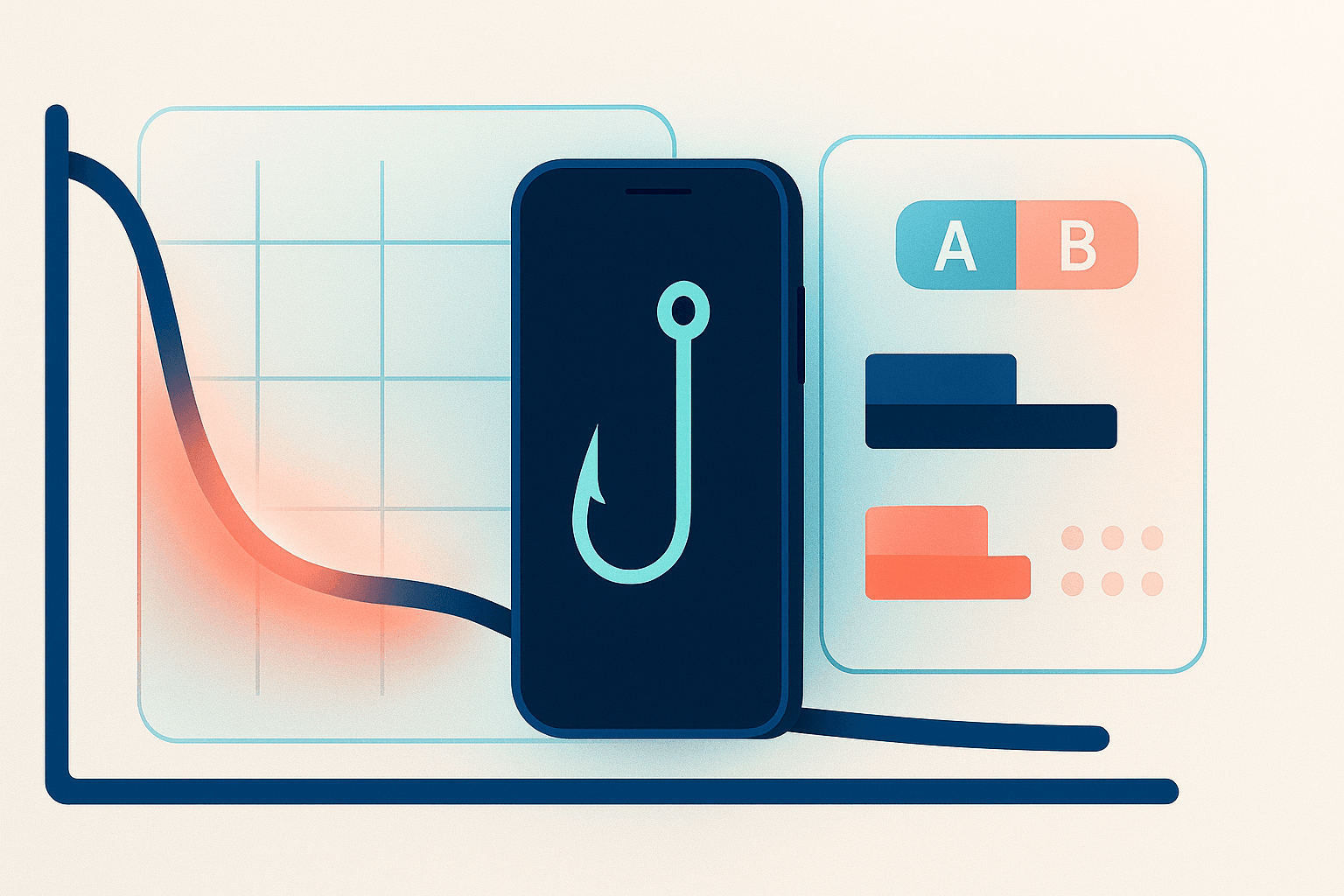
The short version. Hook rate is the single highest-impact metric in short form video. Optimizing the first 3 seconds matters more than every other variable combined. This walks through how to measure hook rate, the patterns that consistently produce 70 plus percent hook rates, and the A/B testing methodology that lets you iterate without guessing.
Why the First 3 Seconds Decide Everything
Short form algorithms are built around a single question: did the viewer watch past the first 3 seconds? That number determines whether the algorithm pushes the video to a wider audience or kills its distribution.
If 70 percent of viewers make it past 3 seconds, the algorithm interprets the video as worth showing more people. Reach grows. If 40 percent make it past, the algorithm shuts it down. Reach dies.
This means a great script with a weak hook is a wasted video. The best advice in seconds 4 through 38 never reaches anyone because viewers leave before getting there.
Measuring Hook Rate Across Platforms
TikTok
TikTok Studio shows retention curves with the 3-second mark visible. Open any video, view analytics, look for the retention chart. The percentage at the 3-second mark is your hook rate.
YouTube Shorts
YouTube Studio shows audience retention. The relevant metric for Shorts is "average percentage viewed" plus the visual retention curve. The 3-second mark is your hook rate.
Instagram Reels
Instagram Insights shows watch time but does not always expose the 3-second retention specifically. The proxy metric is the percentage of accounts that swipe past versus stay.
Healthy Benchmarks by Niche
| Niche | Healthy Hook Rate | Excellent Hook Rate |
|---|---|---|
| Finance and money | 65 to 75% | 80%+ |
| Tech and tools | 60 to 70% | 78%+ |
| Fitness and wellness | 55 to 65% | 72%+ |
| Education | 62 to 72% | 80%+ |
| Entertainment / memes | 50 to 60% | 68%+ |
| News and current events | 58 to 68% | 75%+ |
| History / facts | 65 to 75% | 82%+ |
| Storytelling / narrative | 55 to 65% | 70%+ |
Hook Patterns That Outperform
Pattern 1: The Open Curiosity Loop
State a specific claim that demands resolution.
- This 1957 experiment is still classified.
- The cost to print one dollar is more than one dollar.
- This 30-second technique fixed my sleep in a week.
The brain hates open loops. The viewer stays to close the loop.
Pattern 2: The Pattern Interrupt
Something unexpected in the first frame visually or conceptually.
- An unusual prop or setting
- A counterintuitive statement
- A surprising reveal in the opening shot
Pattern 3: The Strong Opinion
Take a position rather than describe.
- Most diet advice is wrong about this.
- The tool everyone recommends is overhyped.
- You are doing your push-ups completely wrong.
Opinions trigger emotional response. Descriptions do not.
Pattern 4: The Specific Number
Concrete stats outperform vague descriptors.
- 97 percent of beginner traders lose money in their first year.
- 3 specific exercises rebuilt my back in 6 weeks.
- The 17 minute morning routine that replaced my entire skincare regimen.
Hook Killers to Avoid
Greetings
Hey everyone. What is up guys. Welcome back. Instant scroll. The viewer is not your friend yet. Earn that first.
Setup Phrases
Today I want to talk about. So I was thinking. Get to the thing.
Vague Promises
You will love this. This is going to blow your mind. Lazy and overused. Skip the hype, deliver the substance.
Generic Question Hooks
Did you know that. Used a million times. The phrase itself is a tell.
The A/B Testing Methodology
Step 1: Pick a Topic
Choose a topic broad enough to support multiple hook angles. Why most diets fail can support a curiosity hook, a strong opinion hook, a specific number hook, or a pattern interrupt hook.
Step 2: Write 4 Hooks
Generate 4 different hook variants for the same topic. One per pattern category.
Step 3: Produce 4 Reels With Identical Body and Closer
The only variable is the first 3 seconds. The rest of the script and visuals stay constant.
Step 4: Post on Different Days
Post each reel on a different day, same time slot. 4 reels over 4 days.
Step 5: Wait 48 Hours, Then Compare
Pull hook rate, completion rate, and total view count for each reel. Identify which hook pattern won by the largest margin.
Step 6: Repeat With New Topics
Run the same protocol on 8 to 10 different topics. Pattern across results reveals which hook style your specific niche audience responds to.
Hook Rate vs Completion Rate
Hook rate measures whether viewers stay past the first 3 seconds. Completion rate measures whether they finish the video.
The relationship matters because they fail differently:
- Strong hook + weak completion = the script middle is dragging. Tighten beats 4 through 25.
- Weak hook + strong completion = the audience that stays loves the content but most never give it a chance. Rewrite the hook.
- Weak hook + weak completion = fundamental issue. Re-examine the niche fit and the structure.
The 12 Variable Audit
If your hook rate is below the niche benchmark, audit these variables in order.
- Is the hook a complete statement (not a setup)?
- Is it specific (numbers, names, places)?
- Does it create a curiosity loop?
- Is the first frame visually engaging?
- Is the voice tone matching the topic energy?
- Is the music starting in a way that does not hide the voice?
- Are the captions visible and synced from second 1?
- Is the cover frame matching the hook content?
- Is the lighting (or visual quality) acceptable?
- Is the duration matching the niche standard?
- Is the niche specific enough to attract the right audience?
- Is your account history consistent (so the algorithm has correctly classified you)?
The Cover Frame Question
For YouTube Shorts and Reels, the cover frame is the visual viewers see before the video starts. A strong cover increases the chance someone clicks (CTR).
What makes a strong cover:
- Clear focal point (face, product, key visual)
- High visual contrast
- Optional text overlay matching the hook
- Avoids generic stock-photo aesthetics
For TikTok specifically, the cover matters less because videos auto-play. The hook itself does the work.
The Compounding Effect of Hook Optimization
A 10 percentage point hook rate improvement (from 60 percent to 70 percent) does not produce a 10 percent reach improvement. It typically produces a 30 to 80 percent reach improvement because the algorithm allocates exponentially more reach to videos above its quality threshold.
This is why hook optimization is the highest-payoff activity in short form video. Small improvements in hook rate produce large improvements in total views, follows, and revenue.
Field Notes From Creators Who Tested Hooks Systematically
Patterns from creators who treated hooks as a science.
- Niche affects hook patterns more than expected. Curiosity hooks dominate finance and history. Pattern interrupts dominate entertainment. Strong opinions dominate fitness and politics. The same hook structure does not work universally.
- The first word matters disproportionately. A hook starting with a number ("3 things") performs differently than one starting with a verb ("Stop"). Test starting words specifically.
- Hook length matters less than hook density. A 9-word hook with high information per word beats a 5-word hook with vague claims.
- Audience familiarity erodes hooks over time. A hook pattern that worked 6 months ago may now feel overused. Refresh patterns quarterly.
- The visual matches the hook. Verbal hook saying this experiment was classified while showing a generic stock office scene loses to the same hook over a redacted document image.
Specific Hook Templates by Niche
| Niche | Template | Example |
|---|---|---|
| Finance | The [number] mistake that costs [outcome] | The 1 percent mistake that costs you 200k in retirement |
| Fitness | Why your [exercise] is not working | Why your push ups are not building chest |
| Education | The [topic] thing nobody teaches | The grammar rule nobody teaches in Spanish class |
| History | This [event] is still classified / hidden | This 1963 incident is still classified |
| Productivity | The [number]-minute habit that [outcome] | The 7-minute habit that doubled my output |
| Tech | You are using [tool] wrong if [condition] | You are using ChatGPT wrong if you start with the question |
The Hook Refresh Cycle
Hook patterns get worn out by the audience over time. The refresh schedule that keeps content fresh:
- Use the same hook pattern for 8 to 12 reels in your niche
- If retention starts dropping, switch hook patterns
- Cycle through 3 to 5 different hook patterns over 90 days
- Track which patterns hold up best for your specific audience
- Build a personal library of go-to hook patterns that work for you
Visual Hooks vs Verbal Hooks
The strongest hooks combine both layers. The verbal hook creates the curiosity loop. The visual hook reinforces it without redundancy.
| Verbal Hook Type | Best Visual Pairing |
|---|---|
| Curiosity loop ("This X is still classified") | Mysterious or redacted-looking visual |
| Strong opinion ("Most people are wrong about X") | Confident face-to-camera shot |
| Specific number ("47 percent of X") | Number on screen, large and bold |
| Pattern interrupt ("X but actually Y") | Visually surprising opening shot |
The Common Mistakes That Tank Hooks
- Burying the claim. The hook should land in the first 5 words. Setup beforehand kills it.
- Hyping without delivering. "You will not believe this" without a real reveal trains audiences to ignore your hooks.
- Visual mismatch. Verbal hook and visual hook telling different stories.
- Using the same hook every video. Repetition gets the algorithm to deprioritize the account.
- Cliched openers. "Did you know" "Imagine if" "What if I told you" are all overused.
Bottom Line
The first 3 seconds is a control point most creators ignore in favor of obvious things like equipment and editing. The creators who systematically test hooks separate themselves from the creators who guess.
For specific hook templates ready to test, the 50 hook templates is the fastest starting point. If your retention drops in the middle rather than the beginning, the 30-second script formula covers the structural side.
For the broader troubleshooting framework, the 12 fixes for low-view AI videos places hook rate in the wider context of all the variables that affect performance. And if you want to think about which platform rewards hook strength most, the platform comparison covers the algorithmic differences.
Ready to test a stronger hook today? Open AIShortGen, draft 3 hook variants for the same topic, and post one per day for the next 3 days. Compare the retention curves on day 5.
Written by Abd Shanti
Co-Founder of AIShortGen
Building AI tools for content creators. Writes about short-form video strategy, AI-powered content creation, and what actually works on TikTok, Reels, and Shorts.